Communist Party discipline
The God of Small ThingsCommunist Party discipline is the principle invoked to place organizational unity above individual claims, and its decisive significance lies in how that principle becomes an instrument of abandonment. Comrade K. N. M. Pillai can summon workers to demand what is theirs and speak in the name of revolution, but when Velutha asks for help, the Party’s rules are used to exclude him. The novel sets that refusal beside the state and caste power gathering against Velutha, exposing the distance between political solidarity as a slogan and protection as an action.
Doctrine and Political Practice
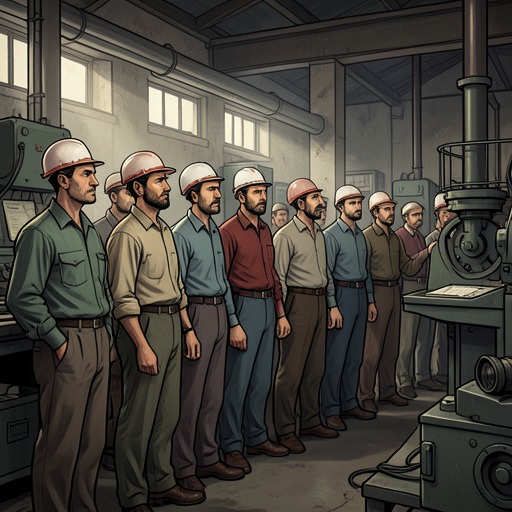
At Paradise Pickles, political organizing first appears as an after-hours activity: “Comrade! Comrade!” is a game outside work until the stakes rise and Chacko’s authority over the factory is challenged. The factory is already steeped in debt, and its workers are paid below the minimum rates specified by the Trade Union. Chacko tells them that wages will be revised when the business improves, believing that they trust his intentions. Pillai, by contrast, gathers workers after shifts at his printing press and urges them toward revolution, combining local grievances with Maoist rhetoric.
The promises he voices are concrete: a yearly bonus, a provident fund, and accident insurance. Yet the scale and cadence of his speeches exceed the cramped local setting; he performs them as rehearsal for addressing much larger crowds as a local Member of the Legislative Assembly. His rhetoric makes the workers’ demands audible, but the novel also establishes that political language is being shaped by personal ambition and local calculation.
Pillai avoids naming Chacko in his speeches, referring instead to “the Management” as an abstract functionary. This lets him denounce a bourgeois role while continuing private business with Chacko: Pillai’s press earns income from printing Paradise Pickles labels. He separates Chacko the client from Chacko the management and from Chacko the comrade, sustaining a public revolutionary posture alongside a practical commercial relationship. Discipline therefore belongs to a political world already threaded with accommodations and divided loyalties.
Velutha’s Position in the Party
Velutha is the only card-holding Party member among the Paradise Pickles workers. That status could have made him an ally to Pillai, but Pillai regards him as a complication: the other Touchable workers resent Velutha for their own longstanding reasons, and Pillai waits for an opportunity to resolve the difficulty. The Party’s local structure thus contains a contradiction. Membership gives Velutha a formal political connection, but it does not dissolve caste resentment or guarantee that the organization will stand with him.
The contradiction sharpens when Pillai speaks to workers about accepting low wages even though their own government is in power. He keeps in touch with them and makes a point of learning what happens in the factory, but knowledge and agitation do not amount to protection for each worker. The novel distinguishes a leader’s capacity to mobilize collective demands from his willingness to defend a vulnerable member when the conflict turns personal and dangerous.
The Refusal of Support
After Velutha has been confronted at the family home, his last visit to Pillai becomes a concealed hinge in the events that follow. Velutha later crosses the river in darkness and rain, swimming against the current toward the History House. The narrative identifies the unspoken outcome of that visit as the final betrayal that sends him into the path of history, while leaving the encounter itself secret. What can be established is the political refusal that gives the secrecy its force: when Velutha seeks help, Pillai answers that the Party was not constituted to support workers’ “indiscipline in their private life.”
Pillai’s words convert a demand for solidarity into a disciplinary problem. He does not present the Party as a source of protection in Velutha’s private crisis; instead, he makes the boundary between private conduct and public organization the reason to withdraw. As he recedes from the doorway, his voice remains, breaking into the familiar fragments of political speech: the organization’s interests, the subordination of the individual, the violation of Party discipline as a violation of Party unity, and finally the progress of the revolution. The slogans continue after the person who needs help has been turned away.
Political Calculation and Institutional Power
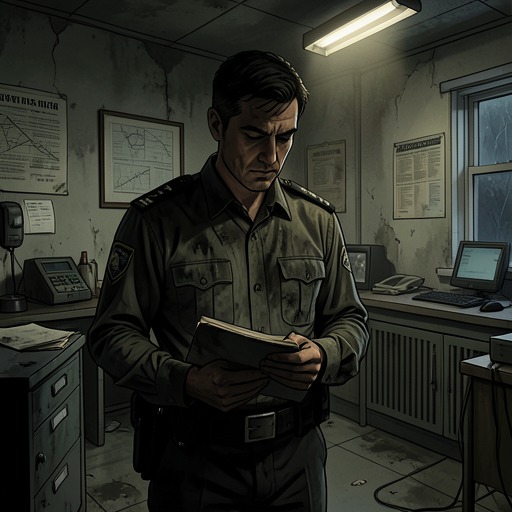
Pillai’s refusal sits within a wider pattern of political self-preservation. When Baby Kochamma reports Velutha to Inspector Thomas Mathew, she recasts Ammu and Velutha’s relationship as an attempted rape and tells a story designed to contain scandal and protect the family’s reputation. The Inspector hears her account, supplies police tea, and prepares a First Information Report. His dismissive remark about people first spoiling the Untouchables and then asking the police for help reveals the paternalism underlying the family’s claim to have educated and trained Velutha.
The Inspector then summons Pillai to learn whether Velutha has political backing. Although a Congress man, he does not want a confrontation with the Marxist government. Pillai says that he knows Velutha but omits that Velutha is a Party member and that he had come to Pillai’s door the previous night. He neither refutes the false allegation nor offers Velutha the Party’s protection; instead, he assures the Inspector that Velutha is on his own. The principle of discipline, in this setting, operates less as an abstract doctrine than as a practical decision about who will be left without institutional support.
Pillai’s political ambitions also depend on visible influence. When Chacko visits his home, Pillai wants villagers seeking help with hospital nursing jobs for their daughters to be seen waiting outside. Chacko’s presence on Pillai’s turf would send useful signals to the supplicants and Party workers. This episode reinforces the contrast between public posture and private alliance: Pillai uses relationships across political and business lines to build his local standing, while the worker who requires help is denied the protection his Party membership might seem to promise.
Consequences and Narrative Significance
The consequences are not confined to a disagreement over doctrine. Velutha is isolated as Baby Kochamma’s accusation is translated into police action and Pillai confirms that the Party will not intervene. The novel places this abandonment within a broader account of the violence inflicted on him: what the twins witness is described as a demonstration of humanity’s pursuit of ascendancy, structure, order, and complete monopoly, with history appearing under the guise of divine purpose. Their childhood witnessing does not make them understand the machinery at the time, but the retrospective narration identifies the episode as neither accidental nor a private settling of scores.
The force of Communist Party discipline in the novel lies in this disjunction between collective language and individual fate. Workers are urged to advance “wave upon wave,” and Pillai can make their grievances part of a revolutionary performance; yet organizational unity becomes a reason not to stand with Velutha. The slogans survive the encounter, but their promise of solidarity does not. The Party’s hierarchy, local political calculation, caste hostility, and police power converge in the space left open by that refusal.